Before there was Georgia Wood Char, there was a recycling center.
It started with a fire
I’ve spent my working life building things that have to hold up in the real world. Cell towers first, then the steel parts those towers needed, out of a fabrication shop in Commerce, Georgia. Alongside that, I built a construction and demolition recycling operation, the kind of business that finds the value in what other people haul off.
Then the recycling facility caught fire in July 2023. A dramatic one. It started with lithium-ion batteries that came in with a load of material, and investigators traced them to SK Battery America, a battery maker a few miles away. The news ran videos and photos of the batteries recovered from the fire. The building was destroyed, and everybody was safe.
I filed suit against SK Battery America a few weeks later. In September 2024, the case settled for $31 million, before it ever went to a jury. You can read the coverage from the Atlanta Journal-Constitution and FOX 5 Atlanta.
Rebuilding the same business looked possible on paper. The insurance said otherwise. I knew I had to come up with a solution to move forward, and I was severely handcuffed with how the insurance was working out.
The taco stand rule
After a loss like that, the tax rules want you to reinvest in a like-kind business. Here’s how I explain it: you can’t start out with a taco stand and go from a taco stand to a plumbing company. It doesn’t work that way. You’d have to go from a taco stand to a burger stand.
So the next business had to be environmentally friendly, count as recycling, and do the community some good. I looked at a few options, and then came the conversation that changed everything.
A phone call by the wood heater
It happened in my barn. I was sitting by a wood heater, brainstorming with a friend, when he got a call about biochar. He stepped out, came back, and started talking. The more he told me, the more it drew me in.
Within about two weeks I was on a plane to Colorado to see Biochar Now’s facility and meet the team behind the technology. From there, I knew what I wanted to do. I came home with a plan to bring it to the South, because I knew Georgia had the wood supply to support it.
So where is our biochar made in Georgia?
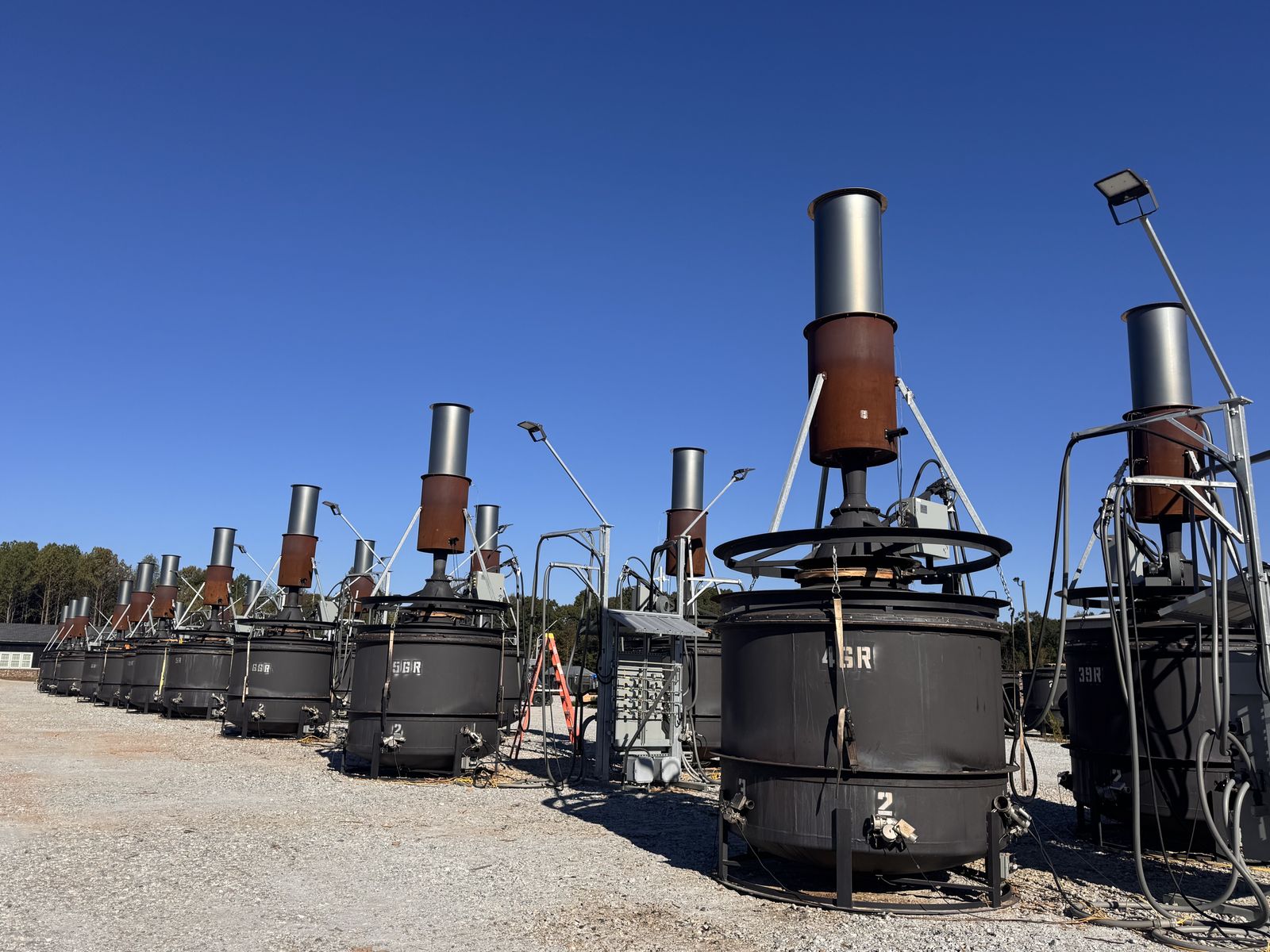
Right here in Commerce, Georgia, on US Highway 441. We run licensed Biochar Now kiln technology, and we’re currently the largest facility of this technology in the United States, running Biochar Now’s technology.
Today we run 90 kilns, with a goal of 180. Call where we are phase one and a half of three, with the infrastructure already built for all three phases.
Georgia Wood Char
Where our biochar is made in Georgia
Right here in Commerce, from Georgia wood.
Map of Georgia with a pin on Commerce, in northeast Georgia, along US Highway 441, where Georgia Wood Char makes its biochar.
I’m a licensee, and the relationship runs both directions. Anything I find that can benefit the technology of anybody in the licensee group, I share back with them, and they do the same for me. Biochar Now’s team even flies out to review our processes. Being the biggest site means Commerce is often where the lessons get learned first.
From log to bag: how it works
Here’s the path every load of wood takes.
Georgia Wood Char
From log to bag
The path every load of Georgia wood takes in Commerce.
- Weigh it and log itEvery truck is weighed when it comes in.
- Split, stack and waitWood is split and stacked to air-dry for at least three months.
- Shred and screenDry wood is shredded and screened.
- Load, cap and fireCapped kilns fire for about eight to nine hours.
- Slow, sealed cool-downSealed off from oxygen, the char cools for about 18 hours.
- Into the bag houseThe char moves into a bag house under vacuum.
- Screened and sizedScreens and roll crushers size it into four grades.
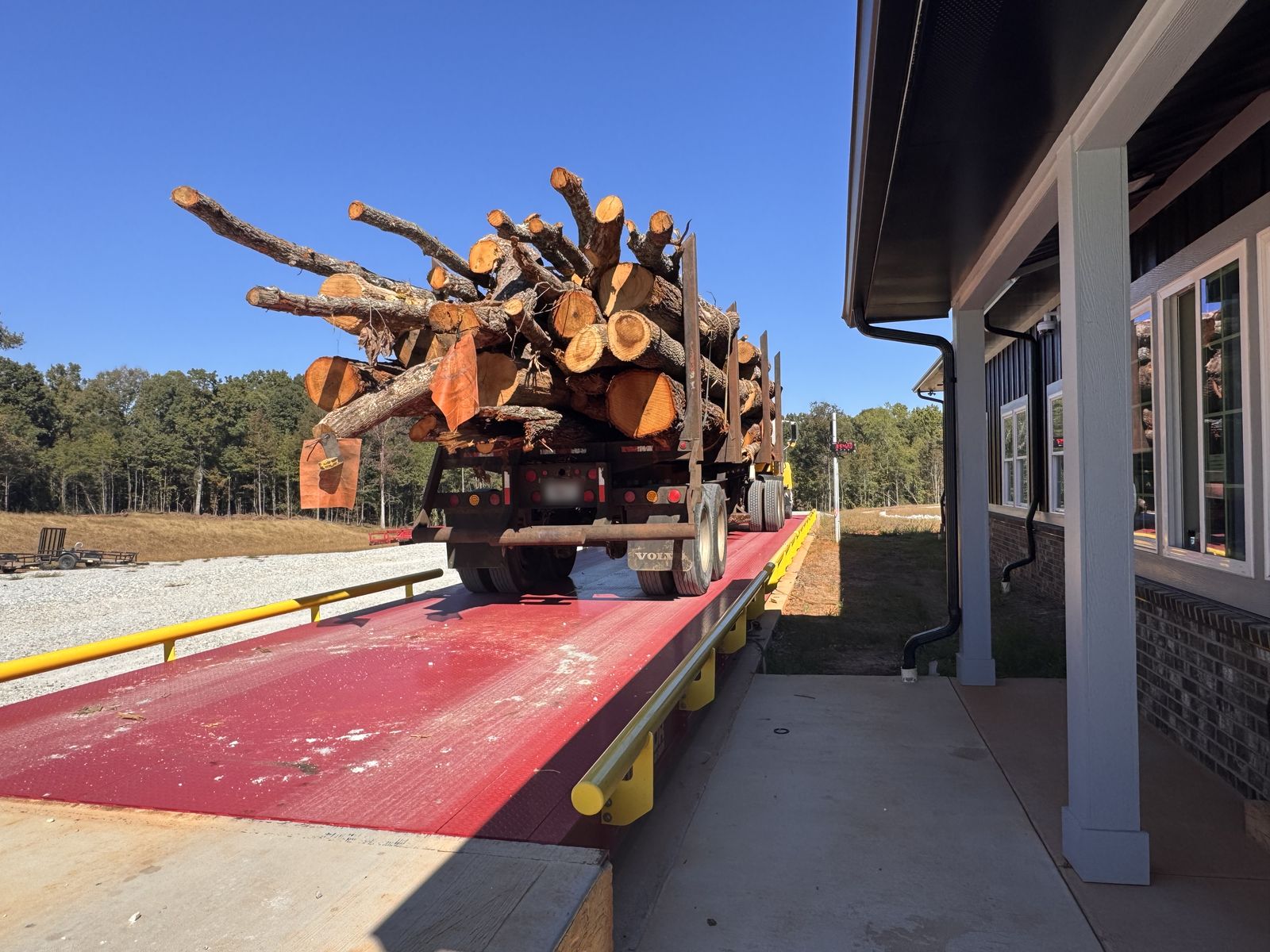
1. Weigh it and log it
Every truck gets weighed when it comes in. All of our data is kept extremely tight on how much wood we bring in and how much we process every day.
2. Split, stack and wait
The wood gets split and stacked to air-dry. My program holds it at least three months before it goes any further. Dry wood takes only a little natural gas to get burning.
3. Shred and screen
After drying, the wood is shredded and run over a screen that pulls out the fine material. That keeps air moving through the kiln, so the heat goes into chunky wood that converts to biochar.
4. Load, cap and fire
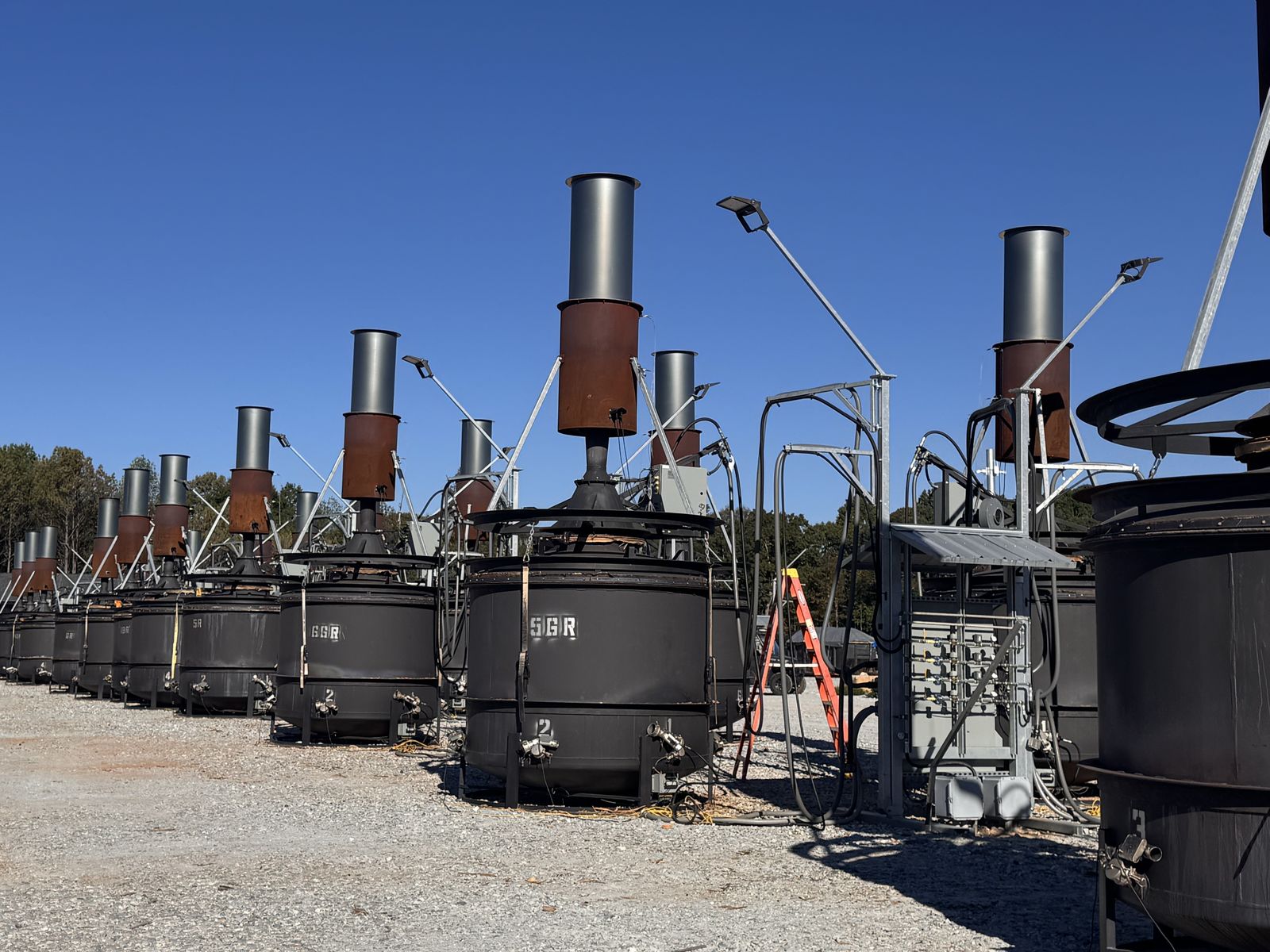
The shredded wood is loaded into a kiln, the kiln is capped, and it goes onto the production line. Once it’s fired, it runs about eight to nine hours. That process is pyrolysis: heating wood with very little oxygen so it turns into carbon-rich char.
5. Slow, sealed cool-down
The crew pulls the cap down tight, the char sits sealed off from oxygen, and it cools slowly for about 18 hours. That slow cool-down helps preserve the wood’s natural cell structure, the tiny pores that give biochar its personality.
6. Into the bag house, under vacuum
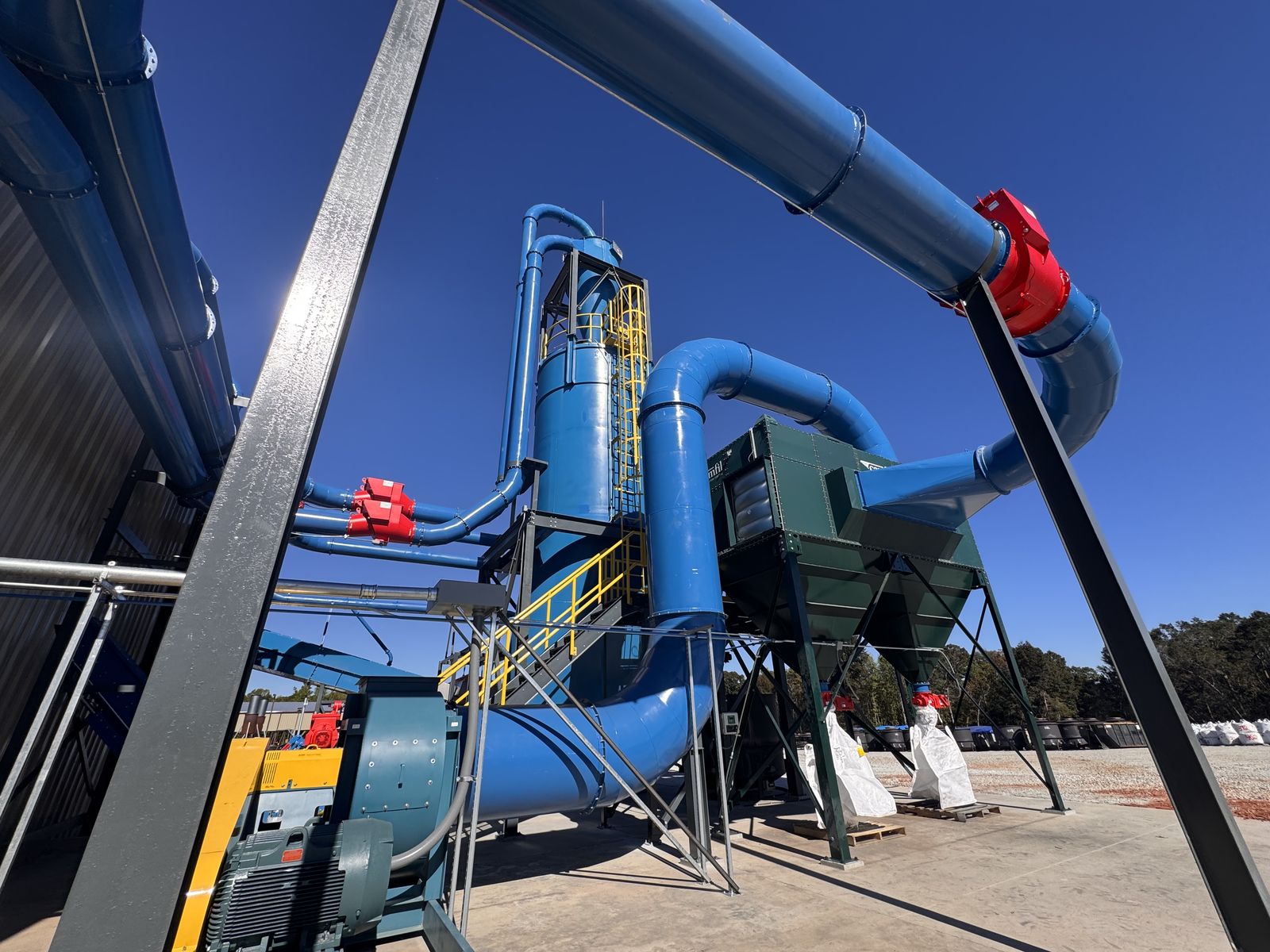
Cooled kilns are tipped into the bag house with a lid on and the kiln under vacuum. This stuff is super dry and dusty, so the vacuum draws all of that fine material into a dust collector. The equipment in the bag house stays under vacuum all the time, which keeps the air clear and makes it a clean place to work. Every bit of product stays in the process, and that’s practical for us, too.
7. Screened and sized
Inside the bag house, screens and roll crushers size the char into four grades: Medium, Small, Powder and a talc-fine Dust of about 20 microns. Every kiln batch runs the same way. You can see all four grades on our products page.
What it takes to run at this scale
Scale brings its own puzzles. Each kiln gets handled 11 times from fill to empty, and that adds up fast across a full day of kilns. The first hour and a half of every burn is hands-on, too. On every kiln, the control operator is basically having to hold its hand to get it to burn.
We found that one operator can handle about 20 kilns, so we’re adding a second control room to give each line its own operator. That was news to everybody, since we’re the biggest site running this technology. What we learn here goes back to the whole licensee group.
Why Georgia, and why it matters
All of our wood is Georgia wood, and about three-quarters of it comes from within 15 to 20 miles of the plant. Loggers and landowners get another home for their wood, and the carbon in that wood gets locked into a stable form. Read how that works in Why Does Carbon Sequestration Matter?, and where the wood comes from in Where Does the Wood for Biochar Come From?
The same production also supports insured carbon credits, sold direct. Details live on the carbon credits page.
Hear the whole story
I tell the whole story, fire and all, on the Georgia Wood Char podcast. If you’re sourcing biochar and want to talk supply, reach out to our team.
For the science on biochar and soil, see the USDA Climate Hubs guide, Soil Restoration with Biochar (PDF). You can also read more on our research page and about page.
Frequently asked questions
Where is biochar made in Georgia?
Georgia Wood Char makes biochar in Commerce, Georgia, using licensed Biochar Now kiln technology.
How big is the Georgia Wood Char operation?
The site runs 90 kilns, with a goal of 180. It’s currently the largest facility of this technology in the United States, running Biochar Now’s technology.
How is the biochar made?
Air-dried Georgia wood is shredded, screened, loaded into capped kilns and fired for about eight to nine hours, then cooled slowly for about 18 hours, sealed off from oxygen. It’s sized in a bag house that stays under vacuum.
What sizes does it come in?
Four grades: Medium, Small, Powder and a talc-fine Dust of about 20 microns. See them on the products page.